Symbiosis in the Desert

Summer temperatures in the Red Cliffs Desert Reserve may often exceed 100 degrees with only a 15 degree drop at night. This is not uncommon in this portion of the Mojave Desert. Over the millennia, amazing adaptations have been made by plants and animal alike to enhance their survival here. Anatomical, physiological and behavioral adaptations are on display every day. Some are quite obvious like cacti, whose leaves have been reduced to spines. What is not as obvious are the remarkable symbiotic relationships that have evolved to enhance survival in these extreme conditions

A symbiotic relationship is best defined as two organisms living together where one or both benefit from the relationship and neither is harmed
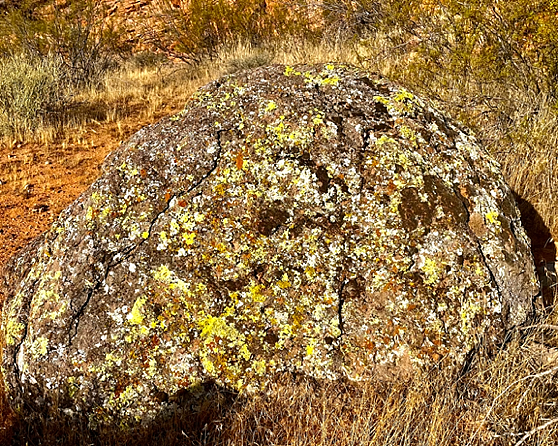
Lichen on Rock, Courtesy & Copyright Marshall Topham, Photographer
Lichen on Rock
Courtesy & Copyright Marshall Topham, Photographer
Anyone who has hiked in the deserts of Utah has encountered rocks splashed with a dazzling display of every color in the rainbow. We call them Lichens, but you may not be aware that they are examples of a mutualistic symbiosis where two organisms live together and both benefits from the relationship. Lichens are actually a partnership between a fungus and a photosynthetic organism, usually an alga or cyanobacterium. The fungus provides a protective structure and absorbs water and minerals from rain, dew, or dust. They also offer shelter from harsh desert conditions such as intense sunlight and temperature extremes. The alga or cyanobacterium are the source of color as they contain Chlorophyl, Carotenoids, Anthraquinones, Uric acid and Melanin’s. They produce food by photosynthesis, supplying life sustaining energy for both organisms

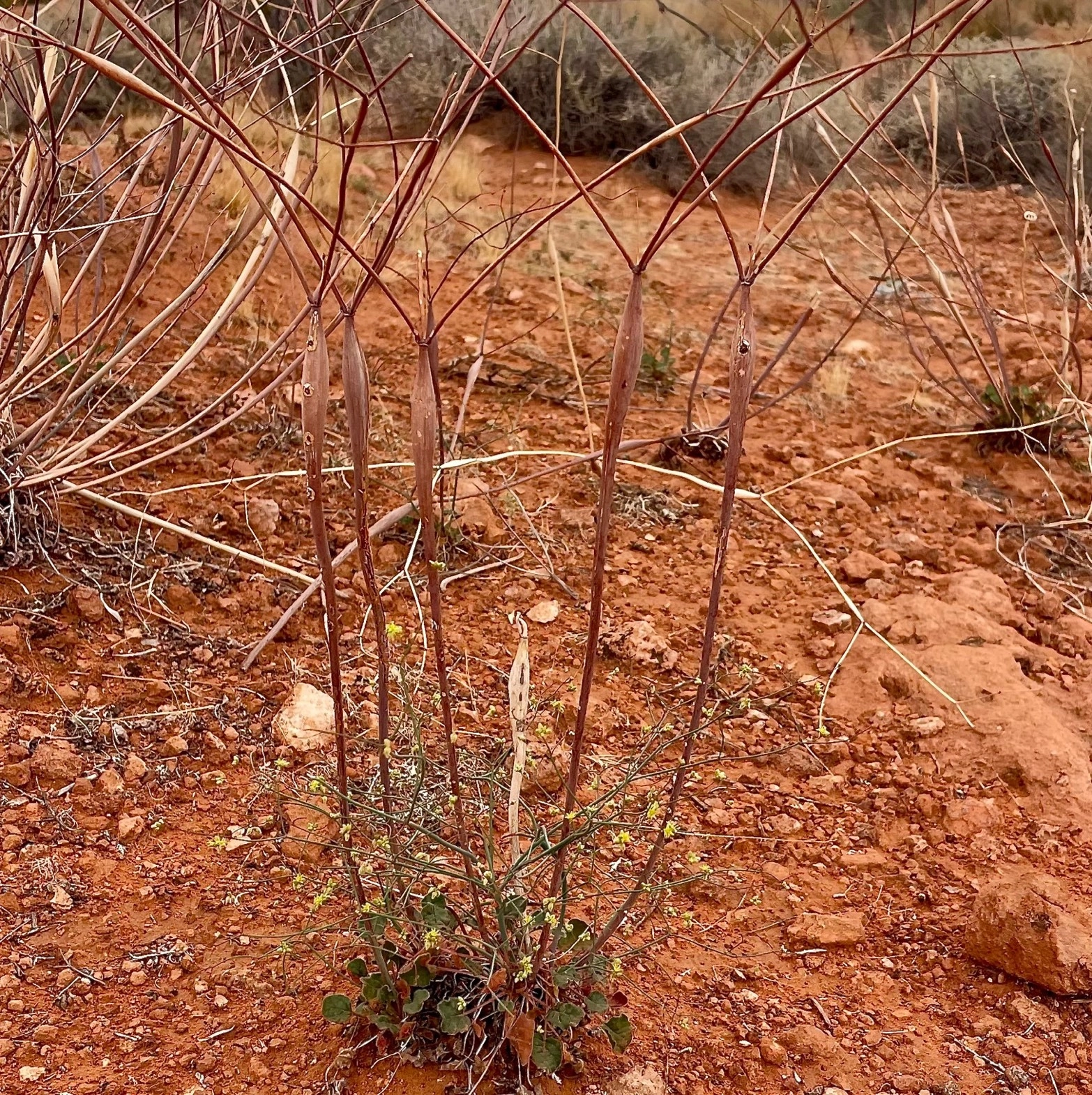
Desert Trumpet with Wasp Exit Holes, Courtesy & Copyright Marshall Topham, Photographer
Desert Trumpet with Wasp Exit Holes
Courtesy & Copyright Marshall Topham, Photographer
Another symbiotic relationship known as commensalisms, where one organism is benefited and the other is neither harmed or benefited, can be found associated with Desert Trumpet plants. These tall slender plants have hollow and dynamic inflated stems. The inflated portions of the stems are penetrated by Cynipidae wasps as they lay their eggs inside the hollow cavity where their larvae develop in a protected environment. The resulting hole left when the larvae emerge as adults, allows access inside the chamber, sometimes for years. a student of mine cataloged over 20 species of insects, spiders and mites that were secondary inhabitants of the hollow stems.

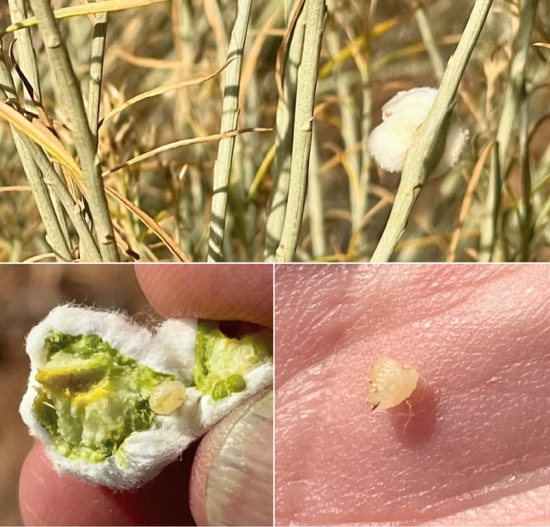
Rabbit Brush Gall, Opened Below Showing Occupant, Courtesy & Copyright Marshall Topham, Photographer
Rabbit Brush Gall
Opened Below Showing Occupant
Courtesy & Copyright Marshall Topham, Photographer

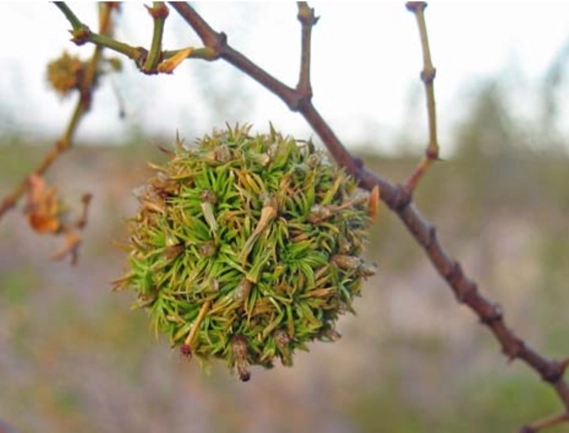
Creosote Gall, Courtesy & Copyright Marshall Topham, Photographer Creosote Gall
Courtesy & Copyright Marshall Topham, Photographer

Perhaps the most interesting of all symbiotic relationships found in the desert is the creation of insect galls. Galls are remarkable cancerous like plant growths, produced as a reaction to chemicals injected by insects. This is most commonly initiated by gall wasps, midges, and aphids. Galls come in all shapes, sizes and architectural design and serve as a protective capsule for insects eggs and developing larvae. Some look like cotton balls others resemble land mines or satellites or simple cupping protuberances on a leaf. These galls provide both food and shelter for the insect’s developing larvae. Despite the harshness of arid landscapes, deserts host a surprising diversity of galls. Each insect species typically induces a highly specific gall on a particular host plant. Chemicals secreted by the insect or its larvae manipulate the plant’s hormonal pathways, redirecting growth to form a unique structure that supports the insect’s life cycle. I am not averse to stopping and dissecting galls to examine the larva inside. I am occasionally surprised to find secondary inhabitants such as spiders, mites and the like. While insects benefit from the galls protection the host plants generally do not seem to Any significant harm.

I’m professor Marshall Topham and I’m Wild about Utah’s Mojave Desert.

Credits:

Images Courtesy & Copyright Marshall Topham, Photographer
Featured Audio: Courtesy & © Bob Holmes, Composer, Hugh Jones, Producer, Rubber Rodeo-Before I Go Away, 1984, https://www.discogs.com/release/9698183-Rubber-Rodeo-Scenic-Views
Text: Marshall Topham, https://ees.utahtech.edu/faculty-staff/
Additional Reading: Lyle Bingham, https://bridgerlandaudubon.org/

Additional Reading

Wild About Utah pieces by Marshall Topham https://wildaboututah.org/author/marshall-topham/

Cane, Jim & Kervin, Linda, Gall Insects, Wild About Utah, January 13, 2011, https://wildaboututah.org/gall-insects/

“Sagebrush is an important member of an ecosystem that helps support many birds, reptiles, amphibians, and mammals, as well as an abundance of insects and microbes. One study found nearly 300 arthropod species directly living on just a few plants including- 72 spider, 237 insect, 42 of which were gall-forming, amongst many other species.”
Greene, Jack, Sage Steppe, Wild About Utah, June 15, 2015, https://wildaboututah.org/sage-steppe/

“Pests and Potential Problems Some ecotypes of rubber rabbitbrush are infected by stem galls, which are caused by two species of tephritid flies (Aciurina species) (McArthur 1979). There are no reports of negative effects caused by the galls. ”
Rubber Rabbitbrush, NRCS, USDA, https://www.nrcs.usda.gov/plantmaterials/mtpmcpg9696.pdf

Lytle Ranch

Lytle Ranch
Courtesy and Copyright Marshall Topham, Photographer
Lytle Ranch
Courtesy and Copyright Marshall Topham, Photographer
Earning national recognition as a birding hotspot the “Lytle Ranch” is a destination for birders from across the nation and beyond. But that is only a portion of what this ranch offers to me or anyone else with an interest in nature. When I visit the ranch, located in the extreme Southwest corner of Utah I find myself at an elevation of 2,000 feet. in a riparian environment on the edge of the Beaver Dam River completely surrounded by hills carpeted with Joshua Trees that define the Mojave Desert. Fresh water running through this desert has given rise to an incredible diversity of life.

Dudley Leavitt, Courtesy Marshall Topham
Dudley Leavitt
Courtesy Marshall Topham

Joshua Tree, Courtesy  and Copyright Marshall Topham, Photographer Joshua Tree
Courtesy and Copyright Marshall Topham, Photographer

Phainopepla, Courtesy  and Copyright Marshall Topham, Photographer Phainopepla
Courtesy and Copyright Marshall Topham, Photographer

Desert Iguana, Courtesy  and Copyright Marshall Topham, Photographer Desert Iguana
Courtesy and Copyright Marshall Topham, Photographer

Utah Banded Gecko, Courtesy  and Copyright Marshall Topham, Photographer Utah Banded Gecko
Courtesy and Copyright Marshall Topham, Photographer

The Lytle ranch has an interesting history. It was originally homesteaded in 1870’s by the Dudley Leavitt family in a remote location Southwest of St. George to avoid prosecution for polygamy. In 1889, Dudley’s daughter, Hannah Louisa, the third wife of Thomas Terry took over the ranch. They cultivated hay, cattle, and various crops, including fruit trees. In 1912 Hanna left and her two sons, Ed and Jed Terry, continued to farm and retained ownership of the ranch. In 1928, John Eardley purchased 462 acres of that property. He and his family constructed a ranch house, reservoir, fences, ditches, and cultivated alfalfa, sorghum, melons, and various fruits. Talmage and Eleanor Marie Lytle acquired the ranch from the Eardley’s in 1952. They operated the ranch without modern utilities until 1979.

In 1983, The Nature Conservancy purchased the 462-acre property to preserve its unique natural features and wildlife. In 1985, Brigham Young University (BYU) acquired the ranch, committing to its use as a nature preserve dedicated to education and research.

Public access to Lytle Ranch property, restrooms, potable water make my visits here even more enjoyable. Reservations for primitive campsites can be made on BYU’s website. For many years I have enjoyed birding at the ranch, arriving with the expectation of being greeted by the resident Phainopeplas. During migration season it is not uncommon to identify 50+ species of birds in a day without leaving the ranch. I generally carry along my checklist of anticipated birds, downloaded from the Bean Life Science Museum website at BYU. The list was created by a friend, Merrill Webb. His incredible contributions to the ranch are memorialized with his name on benches around the ranch.

If the birds were the only attraction here it would be well worth my time. but the river and the property surrounding this riparian portion of the ranch provides a home for a wonderful array of unique flora and fauna not typically seen outside Washington County, at least in the state of Utah. There are at least 38 species of reptiles and amphibians on or near the property. My personal life list in this area includes Mojave Desert tortoise, Gila Monster, Chuckwalla, Western Banded Gecko, Desert Iguana, Mojave Rattlesnake, Speckled Rattlesnake, Desert Sidewinder, Western Lyre Snake, Western Blind Snake and Western Ground Snake, Canyon Tree Frog, Pacific Chorus Frog and Tiger Salamander, to name just a few. I have also encountered several species of fish in the river, most notably the endangered Virgin River Chub. The stream through the Mojave Desert attracts a number of mammals, such as Beaver, Mule Deer, Desert Bighorn Sheep, Cougars, Bobcats, Jack Rabbits, Cottontails, Racoons, and Ringtail Cats. Porcupines also, as well as a number, and a variety of rodents.

Every time I visit the ranch, I’m reminded of how few places there are in the state of Utah where one could go and experience such tremendous biodiversity. The diversity of both plant and animal life here is unparalleled. As I enjoy another day wandering in this special place my thoughts turn to the Leavitt’s, Terrys, Eardley’s, and Lytle’s who toiled to eke out a living here. I wonder if they appreciated or even understood how unique the biodiversity on this property was. Somehow it doesn’t seem fair that they may not have enjoyed the biodiversity here as much as I do.

I’m Wild about Lytle Ranch and Utah.
This is Professor Marshall Topham of Utah Tech University.

Credits:

Images Courtesy & Copyright Marshall Topham, Photographer
Featured Audio: Courtesy and Copyright Dr. Kevin Colver, WildSanctuary, Soundscapes, https://wildstore.wildsanctuary.com/collections/special-collections
Text: Marshall Topham, https://ees.utahtech.edu/faculty-staff/
Additional Reading: Lyle Bingham, https://bridgerlandaudubon.org/

Additional Reading

Wild About Utah pieces by Marshall Topham https://wildaboututah.org/author/marshall-topham/

Lytle Nature Preserve, Brigham Young University, https://lytle.byu.edu/

Lytle Ranch Preserve, Life Science Museum, Brigham Young University, https://lsm.byu.edu/lytle-preserve [Locate Merrill Webb Lytle Ranch Bird List on this page]

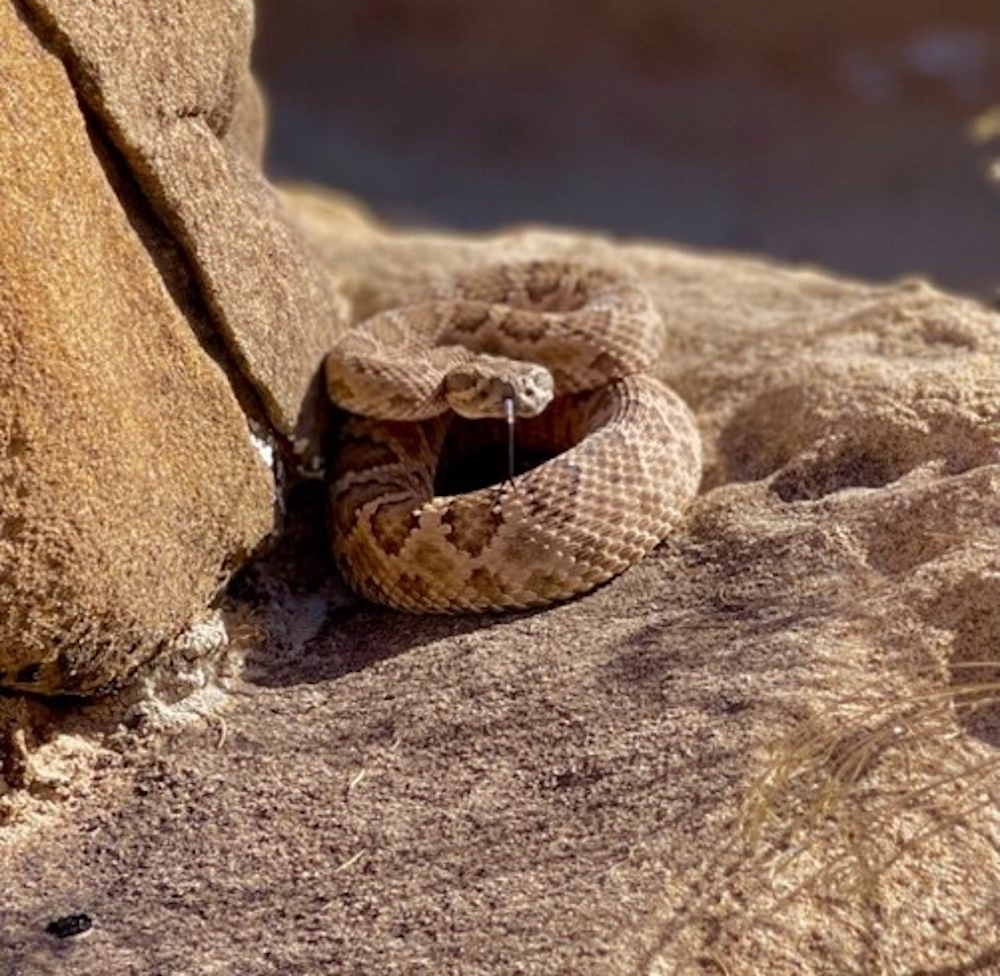
Washington County Rattlesnakes

Washington County Rattlesnakes: Great Basin Rattler Courtesy & Copyright Marshall Topham, Photographer
Great Basin Rattler, Crotalus lutosus
Courtesy & Copyright Marshall Topham, Photographer
I was in the process of taking a video of a Gila Monster in Washington County’s Red Cliffs Desert Reserve. It was walking toward me and backed me into a Creosote Bush. That’s when I heard the buzz. It sounded like I had alarmed a rattlesnake, but I had been fooled before by a bull snake vibrating its tail in dry Leaf’s. It turns out it was indeed a Great Basin Rattlesnake coiled under the creosote and warning me to keep my distance. Washington County boasts 4 species of rattlesnakes, more than any other county in the state. While Great Basin Rattlers and Sidewinders are by far the most common, Mojave and Speckled Rattlesnakes can be found on the slopes of the Beaver Dam wash.

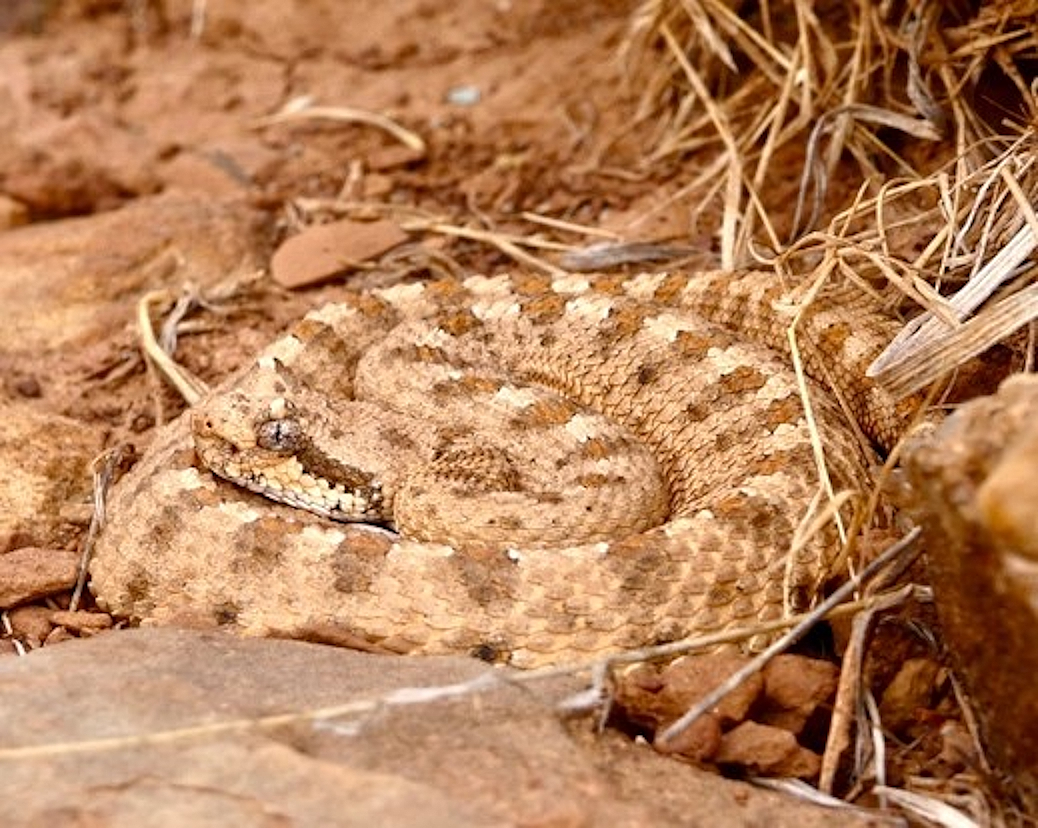
Sidewinder Courtesy & Copyright Marshall Topham, Photographer
Sidewinder, Crotalus cerastes
Courtesy & Copyright Marshall Topham, Photographer

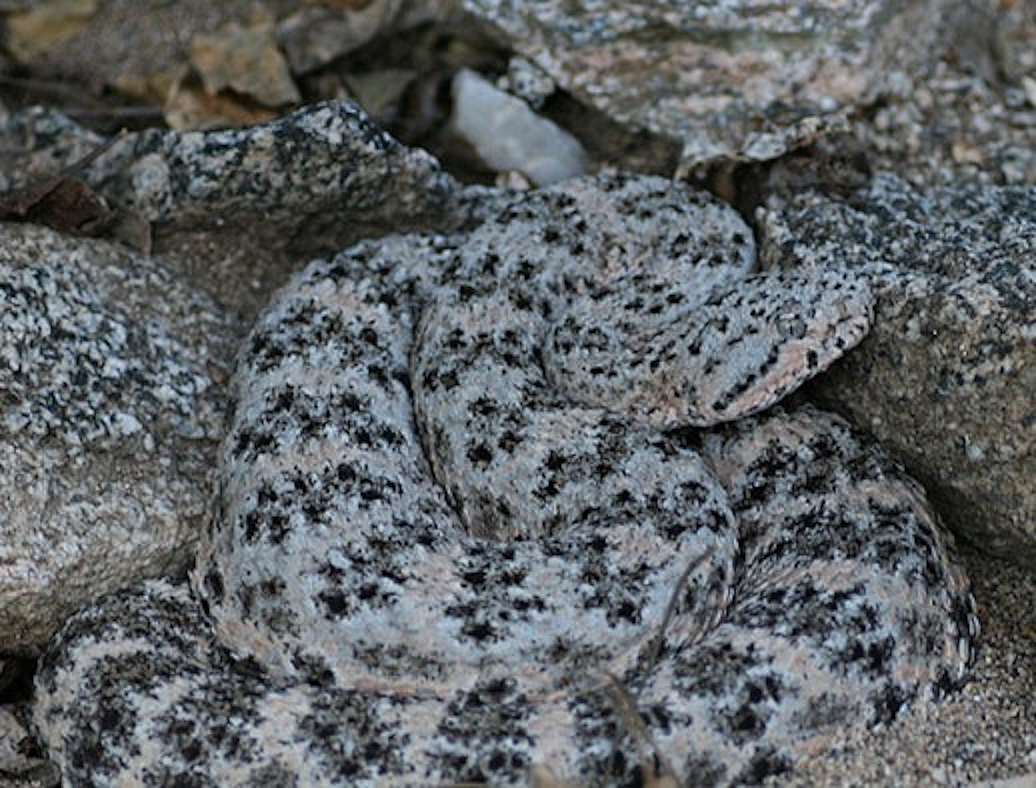
Speckled Rattler Courtesy & Copyright Marshall Topham, Photographer Speckled Rattler, Crotalus mitchellii
Courtesy & Copyright Marshall Topham, Photographer

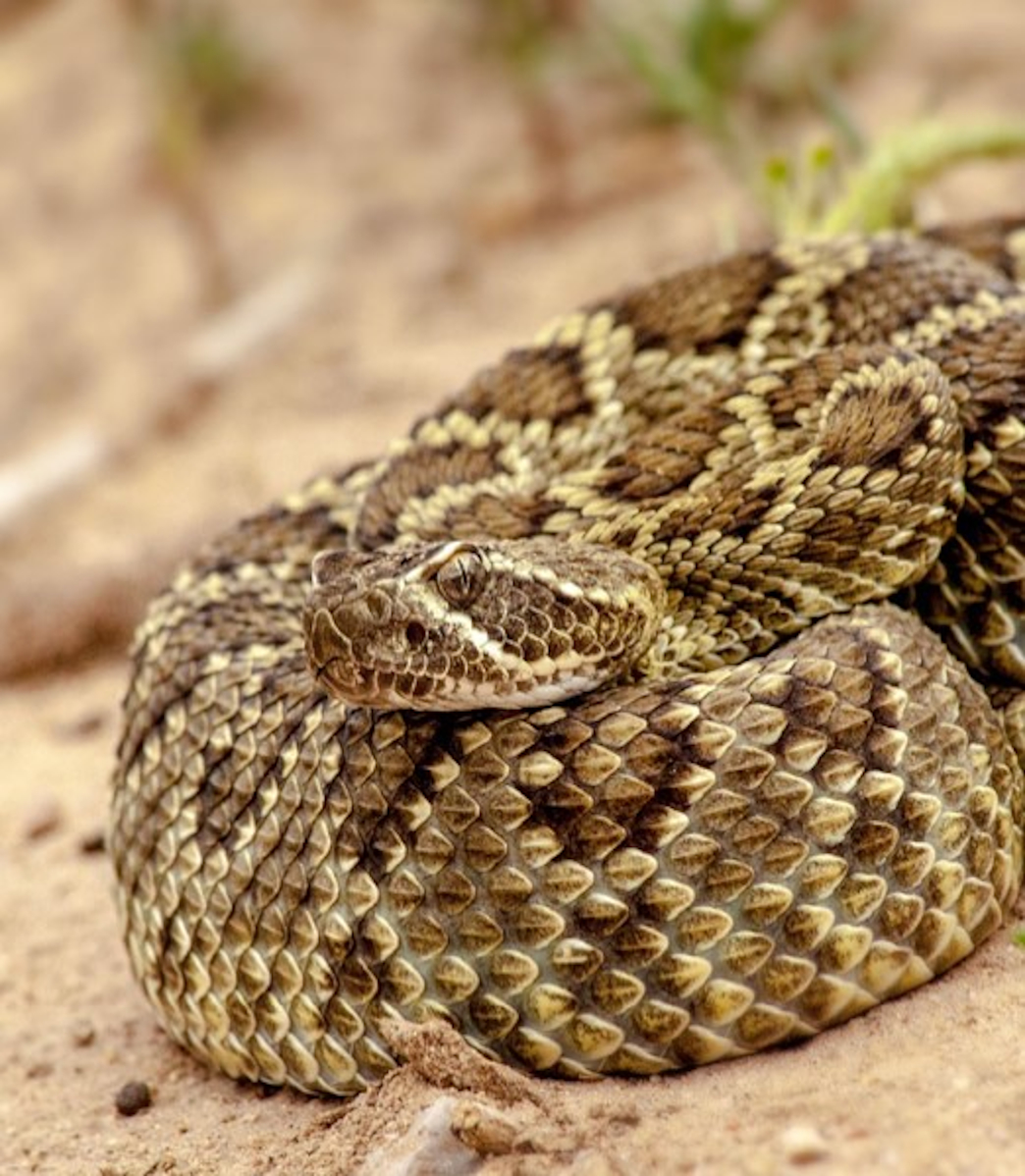
Mojave Rattler Courtesy & Copyright Marshall Topham, Photographer Mojave Rattler, Crotalus scutulatus
Courtesy & Copyright Marshall Topham, Photographer

The motion of Sidewinders is fascinating as they undulate across the desert sand, keeping a portion of its under-belly off the heated sand at all times to reduce overheating. These small (2 ft. or less) snakes have a horn over each eye. They are often overlooked because of their reduced size and reluctance to go in motion. Like most rattlers, they are primarily nocturnal in summer, but crepuscular during cooler seasons. They often bury themselves in sand, exposing only their eyes and horns. This behavior effectively hides them from predators and allows them to ambush prey such as lizards and birds.

Although all local rattlesnakes are well camouflaged, none measures up to the standard of the Speckled Rattlesnake. They seem to be nearly invisible on the basalt rocks where they reside. Out with a group of university students one day on the Beaver Dam Slope, I encountered a Speckled Rattlesnake. I probably wouldn’t have noticed it if I hadn’t watched it coil into a defensive posture. I called students over to observe it as it remained coiled and very still. It was entertaining to watch their reactions as one by one they were able to distinguish it from the rock with a look of excitement and disbelief.

All rattlesnakes are venomous and potentially lethal to some degree. Their venom generally contains hemotoxins which cause blood and tissue damage. The Mojave Rattler sometimes referred to as Green Rattlers, lead the way in this category, their venom contains nerve damaging neurotoxin. Envenomation by this specie is much more concerning as it can cause paralysis. It frequently causes Permanent numbness at the site of the bite.

Getting bitten by a rattlesnake can be a serious medical event but depending on the species, between 25% and 50% of Rattlesnake bites are “dry bites” meaning no venom is injected. If properly treated, within an hour or two, the outlook for recovery from envenomation usually very good. In fact, in North America, over 99% of people who receive prompt hospital treatment with antivenom survive. Over the years, many first aid measures for snakebite have been discredited, some even made the situation worse. It is best to keep the victim calm and still, immobilizing the bitten potion of the body if possible and keep it at roughly heart level as you calmly get to a medical facility.

All rattlesnakes are ovoviviparous, females produce fertile eggs but keep them inside their body until they hatch, so the young emerge alive. This is a great survival strategy in a desert environment where Gila Monsters and an army of other egg devouring creatures reside. Baby rattlesnakes feed on insects and small lizards until they become large enough to seek out warm blooded rodents. All rattlers are pit-vipers. A heat sensory pit is located between the eye and nostril on each side of a rattlesnake’s head. These pits detect infrared radiation (heat) from warm-blooded prey, they are so sensitive they can detect the heat left in rodent tracks. This adaptation is essential for nocturnal or low-light hunting.

Rattlesnakes discern their environment through a reptilian sense of smell. Extending their forked tongues, they collect molecules from the air and transfer them back into their mouths. There they are inserted into two A pair of organs known as “Jacob’s organs”. These organs interpret the molecules as a sense of smell and taste.

Rattlesnakes are marvelous creatures important for maintaining balance in ecosystems. Though feared by many, it is always a red-letter day for me when I have a chance encounter with a rattlesnake in my desert wanderings.

I’m professor Marshall Topham and I’m wild about Utah and its diverse rattlesnake fauna.

Credits:

Images Courtesy & Copyright Marshall Topham, Photographer
Featured Audio: Courtesy & © Friend Weller, https://www.upr.org/people/friend-wellerCourtesy & Copyright © Anderson, Howe, Wakeman
Text: Marshall Topham, https://ees.utahtech.edu/faculty-staff/
Additional Reading: Lyle Bingham, https://bridgerlandaudubon.org/

Additional Reading

Wild About Utah pieces by Marshall Topham https://wildaboututah.org/author/marshall-topham/

Utah Vipers, Fieldguide, Utah Division of Wildlife Resources, Utah Department of Natural Resources, State of Utah, Formerly: https://fieldguide.wildlife.utah.gov/?family=viperidae [Removed February 9, 2026]

Great Basin Rattlesnake, Crotalus oreganus lutosus, Venomous, The Reptiles and Amphibians of Utah [Rye Jones], https://reptilesofutah.com/great-basin-rattlesnake/

Great Basin Rattlesnake, Snake Snap, https://www.snakesnap.co/greatbasinrattlesnake

What to know about rattlesnakes in Utah and how to stay safe, Utah Division of Wildlife Resources, Utah Department of Natural Resources, State of Utah, April 8, 2025, https://wildlife.utah.gov/news/utah-wildlife-news/2094-what-to-know-about-rattlesnakes-and-how-to-stay-safe.html

Wild About Monsters

Wild About Monsters: Gila Monster Sunning, Courtesy & Copyright Marshall Topham, Photographer
Gila Monster Sunning
Courtesy & Copyright Marshall Topham, Photographer
Gila Monster Sensing with Tongue 
Courtesy & Copyright Marshall Topham, Photographer
Gila Monster Sensing with Tongue
Courtesy & Copyright Marshall Topham, Photographer

Wild About Monsters: Gila Monster at Den, Courtesy & Copyright Marshall Topham, Photographer Gila Monster at Den
Courtesy & Copyright Marshall Topham, Photographer

Wild About Monsters: Gila Monster Under Sage, Courtesy & Copyright Marshall Topham, Photographer Gila Monster Under Sage
Courtesy & Copyright Marshall Topham, Photographer

Wild About Monsters: Gila Monster Up to Size, Courtesy & Copyright Marshall Topham, Photographer Gila Monster Up to Size
Courtesy & Copyright Marshall Topham, Photographer

The excitement in her voice could not be more obvious as I answered her call. “Dad, there’s a Gila Monster walking down the middle of my jogging trail right now”. She was only a few minutes away so I ask her to follow it until I could get there. I arrived in time to film it wading through the desert grasses as it made its way back to its den. It’s always a good day when you see a Gila Monster in the wild. Monster sightings are not common in the Southwest corner of Utah even though they are quite abundant in this portion of the Mojave Desert. There’s a reason encounters with these beaded citizens of the desert are uncommon. They can spend more than 90% of their lives underground. Their activity is mostly limited to a few weeks in early Spring, and they generally emerge to forage in late evening, returning to their dens at dawn. Because of their exceptionally slow metabolism, they can survive on as few as three or four large meals a year. Those meals converted into fat, stored primarily in their tails, allows them to spend 10- or 11-months estivating (hibernating) out of sight, in their dens.

Despite their fierce reputation Gila Monsters are shy nonthreatening creatures. I have had them walk across my sandal clad feet on more than one occasion. If hassled these monsters will open their mouth and hiss loudly as a warning, but to get bitten by one would require handling it. They have venom, but lack a mechanism to inject it, so they must flood their mouth with the venom, filling grooved teeth by capillary attraction. They then must chew it into their prey. A Gila Monster bit should receive medical attention, but despite the legends we have all heard to the contrary, there is no reputable record of human death associated with Gila Monster envenomation. To the contrary, the saliva of Gila Monsters contains a compound called exendin-4, which has been synthesized into a drug used successfully to treat type 2 diabetes. This is a prime example of how the study of wildlife can lead to significant contributions to human wellbeing. It underscores the need to protect and preserve wildlife of all kinds. The Gila Monster is the official Utah state reptile, and they enjoy legal protection here and, in every state, where they occur. (CA, NV, UT, NM & AZ)

Several years ago, I had the rare opportunity of filming a Gila Monster excavate and consume four tortoise eggs from the apron of a tortoise den. The entire time a female tortoise stood inches away and observed the carnage without moving a muscle. I found myself wishing I knew how to communicate with tortoises so I could scream out “good grief mother, do something to protect your young”. Times like this create a moral dilemma. Do I intervein in this situation or let nature take its course. On this day I chose the latter.

I’m Professor Marshall Topham and I’m wild about Utah’s Gila Monsters

Credits:

Images Courtesy & Copyright
Featured Audio: Courtesy & © Friend Weller, https://www.upr.org/people/friend-wellerCourtesy & Copyright © Anderson, Howe, Wakeman
Text: Marshall Topham, https://ees.utahtech.edu/faculty-staff/
Additional Reading: Lyle Bingham, https://bridgerlandaudubon.org/

Additional Reading

Wild About Utah pieces by Marshall Topham https://wildaboututah.org/author/marshall-topham/

Gila Monster, Fieldbook of Utah Species, Utah Division of Wildlife Services, Utah Department of Natural Resources, https://fieldguide.wildlife.utah.gov/?species=heloderma%20suspectum

Jolley, Faith Heaton, A rare sighting of the elusive Gila monster, Wildlife Blog, Utah Division of Wildlife Services, Utah Department of Natural Resources, March 28, 2019 https://wildlife.utah.gov/news/wildlife-blog/580-a-rare-sighting-of-the-elusive-gila-monster.html

Red Cliffs Desert Reserve, Washington County & US Bureau of Land Management, http://www.redcliffsdesertreserve.com/